Can you make money on TikTok without showing your face?
5 min read
Faceless accounts are paid through the same routes as any other: a platform's payout program, paid posts and affiliate links. To make money on TikTok without showing your face, what the platforms weigh is whether the content is original, and the Granny Spills case shows the risk. No source gives a typical income, and the cases include a series at a loss and a creator who says he earns little.
What kinds of account have no face?
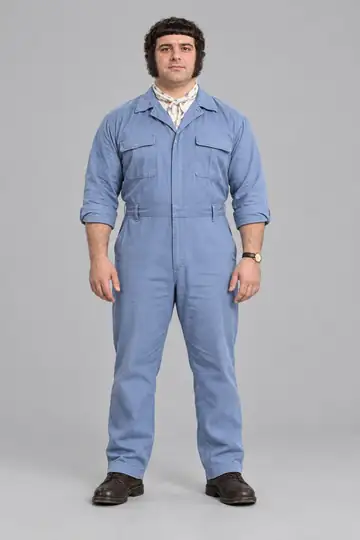
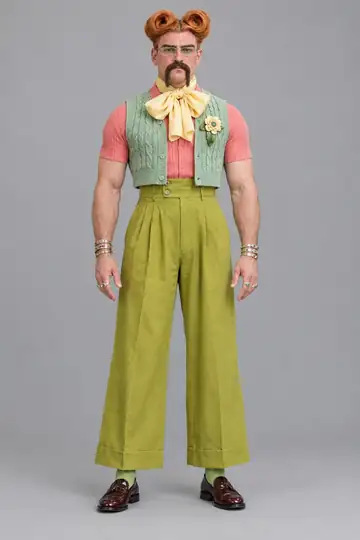
A faceless account can be a voice-over on stock footage, a screen recording, text on screen or an AI influencer who appears in every video. The first three have no face for viewers to remember. The influencer gives them someone to follow, and the AI accounts that took off recently, Granny Spills among them, repeat one figure in every video. Faceless TikTok with an AI character goes through the formats one by one.
Duble AI is the AI-influencer kind. You choose someone from the cast or create your own influencer, pick a trend, and it takes the place of whoever is in it, with the trend's original sound. You never appear. Duble AI does not write a voice-over and does not make a video from a text description.

How does a faceless account earn?
You need a payment route: a client buying a video, a brand buying a sponsored post, eligible affiliate sales or a platform payout. Set a production budget first. An AI character helps make the content, but does not supply clients or guarantee account eligibility. The monetization guide has a paid-project checklist.
What do TikTok, YouTube and Instagram ask of AI content?
Each platform's own page has the current requirements for being paid, and they change, so read it before building on one. What the platforms say about AI content is below.
TikTok. It requires creators to label realistic AI-generated content, and it labels some automatically (TikTok newsroom, May 2024). The requirements to join its Creator Rewards Program are on the program's own page. Its policy on unoriginal or low-quality content is what a TikTok representative pointed TIME to in the Granny Spills case, as told below.
YouTube. The Partner Program policy is called "inauthentic content" (it was renamed from "repetitious content" on July 15, 2025). Mass-produced or repetitive content has always been ineligible, and YouTube says AI content made from generic or unoriginal templates, giving an impression of mass production, is not allowed. AI tools are fine when the final product still shows your creative vision, and YouTube's example of what is allowed is using AI to visualize a unique character and narrative you invented. AI personas that give information on sensitive topics, such as AI doctors, financial hosts or legal advisors, are not monetizable (YouTube Help, read October 2026). Disclosure is required for realistic content, and YouTube says it does not limit a video's audience or affect whether it can earn money (YouTube Help). The thresholds to join are on the Partner Program page.
Instagram. Meta requires its AI-disclosure tool on organic posts with photorealistic video or realistic-sounding audio, and may apply penalties if you skip it (Meta Community Standards, read October 2026). What Instagram asks of an account to be paid is on Instagram's own pages.
The labels, step by step, are in AI labels on Instagram, TikTok and YouTube.
What happened to Granny Spills on TikTok?
Granny Spills is a fictional 75-year-old AI grandmother who gives blunt luxury-lifestyle advice. One of the creators told TIME in November 2025 that TikTok had flagged the videos as "unoriginal" and removed them from the Creator Rewards Program. Asked by TIME, a TikTok representative pointed to a support page that mentions "unoriginal or low-quality content" and did not address the case. The same creator said he hoped to earn through Facebook, YouTube, Cameo and brand deals (TIME).
A payout program is the part the account does not control: the platform decides. A trend video made in Duble AI starts from a clip someone else posted, and whoever posts answers for what they post. We found no platform text that says whether a remade trend counts as original for payouts.
How much can your account earn?
Measure your own confirmed revenue and costs over the same period. There is no figure from another account that predicts your profit. A platform view count, media-value estimate or asking price per post is not money received. The earnings guide explains the calculation.
What does one clip cost you?
On Duble AI the influencer costs nothing to create, up to 3 images, and a 10-second trend video costs 20 credits at Standard quality, from $3.33. The sum for a month of posting is worked out in what an AI influencer costs to run. When a video fails or is refused, the credits come back at once. All of this is cost, and it only becomes income if someone pays: the Granny Spills case shows the platform's payout is not in your hands.
How do you start without showing your face?
Duble AI's terms say it does not promise reach, followers or income from the videos, and the same goes for this article. To try the faceless route, pick someone from the cast or create your influencer, choose a trend that is going around and post the result, labeled as AI-made where the platform asks. If the account takes paid posts, mark them as ads. In Brazil, CONAR's influencer guide, 2026 edition (May 2026), treats virtual personas and AI-made content like any other advertising, and asks for the platform's paid-partnership tool or a visible "#publi" (CONAR).
Frequently asked questions
- Can you make money on TikTok without showing your face?
- It depends on the account having a way of being paid, such as a platform program, a paid post or an affiliate link, and on its videos counting as original. No source guarantees income, and the documented cases include an AI series running at a loss and a creator who says he earns little.
- Can a faceless TikTok account be monetized?
- It depends on the payout program's current requirements, which are on TikTok's own page. TIME reported in November 2025 that a creator of Granny Spills said TikTok flagged the AI account as unoriginal and removed it from the Creator Rewards Program, so a faceless account should not rely on that payout alone.
- Do faceless TikTok accounts make money?
- Calculate your own confirmed revenue and costs. Another account's audience, an asking price per post or a media-value estimate cannot establish your earnings.
- Do you have to show your face on TikTok?
- You do not need to show your face to post: accounts use a voice-over, a screen recording or an AI influencer as the face. What platforms ask is something else. TikTok asks creators to label realistic AI-generated content, YouTube excludes mass-produced content, and each payout program has its own requirements.
- How much does a video cost to make without a face?
- On Duble AI, a 10-second trend at Standard quality costs 20 credits. Creating the character includes 3 free images across attempts and adjustments; no video is free.