
AI video for clients: commercial licenses and permissions
5 min read
Before delivering an AI video to a client, check both the tool’s commercial-use permission and the rights to every source asset. A paid subscription does not automatically clear third-party likenesses, footage, music or brands, and the scope must cover what the client actually intends to publish.
What should you clear before delivery?
| Item | Evidence to obtain | Outstanding issue that prevents unrestricted-use promises |
|---|---|---|
| Person and likeness | Permission for the intended depiction and association | Consent covers only the original recording |
| Reference photo | Ownership or photograph license | The subject does not control photo rights |
| Source footage | Editing and publication rights for the agreed scope | Permission covers an unedited repost only |
| Music | Relevant work and recording permissions | Personal-use or another-platform restriction |
| Brand or familiar fictional identity | Relevant rights plus compatibility with tool Terms | Missing permission or a product prohibition |
| Tool and plan | Current Terms and feature eligibility | “Paid plan” without verified commercial scope |
| Advertising and disclosure | Requirements for the destination | Client approval covers appearance only |
Sources checked October 24, 2026. This is a delivery checklist rather than a ready-made contract or a guarantee of legal approval. AI influencer brand deals covers the business relationship; this article focuses on what you can authorize the client to use. See creating an influencer from your photos to prepare your own reference.
What does the tool’s commercial license mean?
It is the service’s permission to use outputs commercially within its terms. It does not mean the service has acquired rights to files you upload. Separate access to the tool from permission to deliver every element in the result.
Duble AI is our product. Its Terms say results are yours to post and use, including commercially. The same document requires the necessary rights and keeps responsibility for source materials with the user. Library availability is not automatic clearance for a third-party advertising campaign.
The Terms prohibit celebrities and political figures in every case, and also prohibit third-party brands and fictional identities. We do not interpret recognizable catalog references as exceptions or promise that an external license removes a product restriction. Resolve compatibility with the supplier before planning a generation that depends on prohibited material.
Who clears likeness, photos and footage?
Check each rights holder and use. Brazil’s Civil Code Article 20 covers image rights under its stated conditions, including commercial purposes. Portugal’s Civil Code Article 79 has its own consent and exception framework. These examples do not clear a worldwide campaign.
The person in a photo may not own its copyright. A footage creator may lack permission from participants for an AI advertising use. Describe the editing, context and brand association when obtaining permission. Celebrity and likeness rights explains why public visibility does not establish advertising permission.
Brazil’s Copyright Act Articles 29 and 31 address authorization and separate use categories. Do not assume an organic-post agreement covers paid ads, AI adaptation or sublicensing to a different client. Check the law and agreement applicable to the project.
How should you handle client photos and personal data?
Agree who supplies the assets and who must demonstrate permissions. For commercial personal-data processing, assess purpose, legal basis and suppliers under the LGPD or the applicable local regime. A general client approval does not settle every data-protection question.
Read the privacy policy before uploading references. Record the service used and what will happen to files after delivery. This checklist does not assert a retention or deletion period without checking the current policy.
Can the trend’s music appear in the client’s ad?
It depends on the license. TikTok’s commercial documentation directs businesses to the CML and covers commercial organic posts, video ads and branded content. Other audio needs its own review. Check permitted destinations and users for the selected track.
Duble AI keeps the recording’s original sound rather than generating music. That does not transfer a license. If the client wants both Reels and TikTok, confirm both. If it may boost the post later, clear paid media before promising that the same file will work. Trend music rights covers this decision.
Can you promise exclusive rights?
Promise only what you can demonstrate. An original identity avoids deliberately depending on a celebrity or familiar fictional property, but it does not itself guarantee legal exclusivity. Library assets can have other users, and the output’s protection needs its own assessment.
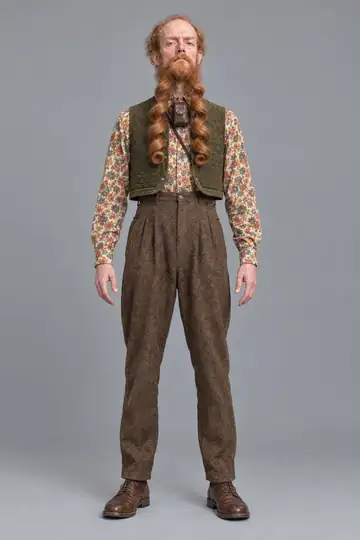
This is an example of an original cast identity, rather than an exclusive right granted to a client. Distinguish permission to use a file, ownership of particular elements and your own contractual promise not to reuse an asset.
Who adds advertising and AI disclosures?
Assign responsibility for sponsorship identification and applicable AI notices. In Brazil, CONAR’s 2026 guide addresses AI advertising. Do not present an invented testimonial as a real personal experience.
For Portugal/EU, check applicable AI Act Article 50 duties as well as platform and advertising requirements. Other markets need local review. A generator’s commercial-use permission does not waive transparency. AI disclosure on platforms covers the publication step.
How can you record open permissions clearly?
Attach this record to the final version and fill it with real evidence:
| Field | Information to obtain |
|---|---|
| File and version | Exact delivered video identity |
| Agreed use | Platforms, countries, period, organic and/or paid distribution |
| Source assets | Photo, footage, music and their rights holders |
| Evidence | Corresponding authorization or license for each asset |
| Restrictions | Excluded destinations, expiry, attribution and other conditions |
| Open items | Missing permissions and who will resolve them |
| Publication | Who applies disclosures and checks the published version |
If paid-media music clearance is outstanding, deliver a review version with that restriction written down. Revisit permission when the destination, campaign or dates change. Approval of the appearance completes the visual review; it does not supply missing rights.
Frequently asked questions
- Can I sell an AI-generated video to a brand?
- It may be possible when the tool permits commercial use and you have the necessary rights for delivery and publication. Paying for generation does not clear third-party likenesses, footage or music. Check countries, platforms, dates and paid-media use before promising the client a usable final asset.
- Does Duble AI allow commercial use of videos?
- Its Terms allow posting and commercial use of results while keeping responsibility for materials and permissions with the user. They also prohibit celebrities and political figures in every case, plus third-party brands and fictional identities. A recognizable catalog option does not establish an exception to those Terms.
- Does a paid subscription include all the licenses?
- No. The plan governs your relationship with the tool and access to features. Permission from the person, photographer, footage owner and music rights holders remains separate. Check whether every license covers AI editing, delivery to the client and publication in the agreed places and formats.
- Can I promise an exclusive generated influencer?
- Do not promise exclusivity merely because you generated an identity or paid for a video. Commercial permission does not establish exclusive rights or resolve every authorship question. A client commitment should match the rights you can document and actually obtain under the relevant agreements and law.
- What should accompany the final video file?
- Provide the authorized usage scope, asset list and licenses, applicable advertising and AI disclosure requirements, and outstanding permissions. Associate the records with the delivered version. If advertising rights are missing, do not describe the file as cleared for paid media simply because the client approved its appearance.