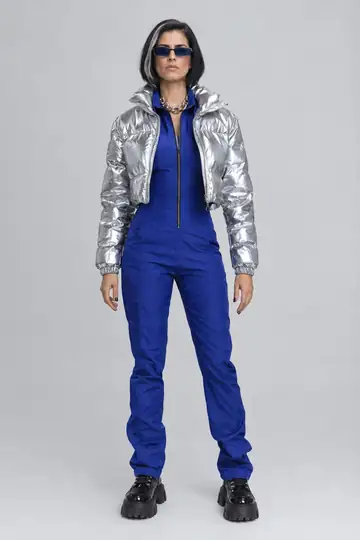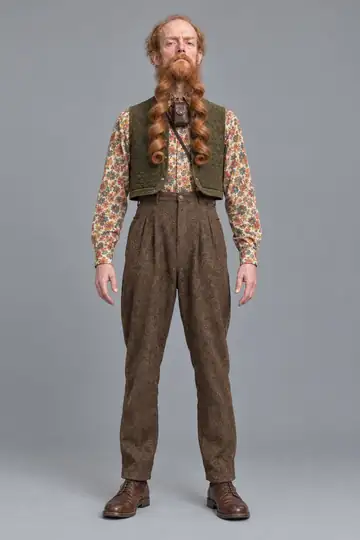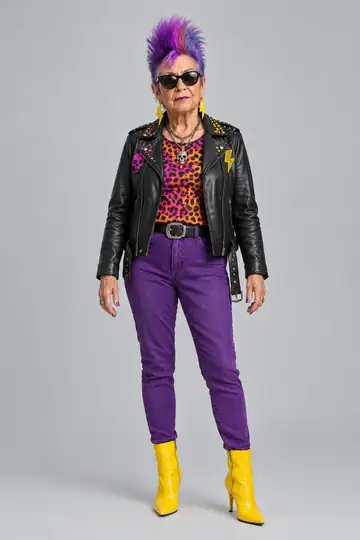
An AI influencer for your brand: build a character of your own
8 min read
An AI influencer for a brand is a face the company invents and controls. It shows up in videos and photos like a creator. Most brands are not using one yet: in a Linqia survey, only 11% of 200-plus enterprise marketers used AI to create content directly (Linqia, October 2025). The case that holds up is narrow: one character of your own, in trends, alongside human creators.
Why would a brand build its own AI influencer?
For control. The influencer lives in the company's account, and nobody else can use it unless the company shares its profile link (an influencer made from images you uploaded has its profile on view, but nobody else can take it). Someone taken from the Duble AI cast comes with no exclusivity, since anyone can take the same one, so a brand that wants its own face makes one from scratch.
Availability is the other reason. Fortune reports that the agency behind Aitana, a Spanish AI model, found human models and influencers unreliable and hard to work with, and that its co-founder was taken aback by skyrocketing costs (Fortune, November 2023). Duble AI remakes a trend with your influencer in one to three minutes (seconds at Turbo), so nobody has to book a shoot to join it.
Are brands actually using AI influencers?
Mostly not yet. The numbers below come from different sources, and none proves by itself that an AI influencer works or fails.
- Linqia asked 200-plus enterprise marketers. 74% use AI to support influencer marketing, and 11% use it to create content directly (NetInfluencer, October 2025).
- TIME, summarizing the same poll, wrote that "89% of them were not planning to work with influencers, AI avatars, or digital clones in 2026". The sentence leaves open whether the 89% covers all three. TIME also cites Business Insider: brand partnerships with AI social accounts are down 30% compared with 2024 (TIME, November 2025).
- YPulse reports that 70% of 13-to-24-year-olds in Europe would not want to follow a computer-generated person. The page does not say how the survey was run (YPulse, September 2026).
- In an experiment by FGV researcher Marcos Facó, virtual influencers showed a credibility deficit, especially on trustworthiness. They did better with rational or utilitarian messages, while humans did better with emotional ones (Consumidor Moderno, June 2026).
Market-size reports disagree with each other: $11.2 billion for 2025 from Grand View Research, whose page prints other figures in a caption (July 2026), and $8.76 billion from Straits Research (August 2026).
What is left is a narrower argument, and an easier one to defend: keep emotional messages with human creators, and use your own influencer, in trends, where control and the cost of joining one matter. What an AI influencer is covers the basics if the term is new to you.
Which brands have done it, and who made the character?
| Case | Made by | What is known about brands | Source |
|---|---|---|---|
| Lil Miquela | Brud, a Los Angeles studio, first post in April 2016 | Work with Prada (a takeover in February 2018), Calvin Klein and Samsung. Signed by the agency CAA in 2020 | Wikipedia, edited October 2026 |
| Lu do Magalu (Brazil) | Began as the voice of Magalu's e-commerce site. She is a CGI character (Virtual Humans, Dec. 2022) | She is Magazine Luiza's virtual brand ambassador. Magalu's Instagram account, which she shares with the brand, had 8.8 million followers in August 2026 | Kolsquare, Aug. 2026; Mercado & Consumo, Apr. 2023 |
| Marisa Maiô (Brazil) | Raony Phillips, a creator from Rio de Janeiro | Magalu posted a video with her on June 7 and 8, 2025, days after her debut, and OLX on June 11. No fee was reported in the articles we read | Canaltech, June 2025; Meio & Mensagem, June 2025 |
| Granny Spills | Two creators from Blur Studios | 1.9 million Instagram followers in August 2026. Kolsquare lists Kurt Geiger and Papi Steak among the brands she has mentioned | Kolsquare, Aug. 2026; TIME, Nov. 2025 |
| Aitana | The Clueless, a Barcelona agency | 393,000 Instagram followers in August 2026 | Kolsquare, Aug. 2026 |
The difference between Lu and Marisa Maiô is the one that matters to a brand. Lu belongs to the company. Marisa Maiô belongs to a creator, and the brands that appeared with her borrowed an influencer for a moment. More cases are in Brazil's AI influencers.
On price, Kolsquare, an influencer-marketing platform, warns that AI influencers' earnings are hard to benchmark because many creators do not disclose them. We found no public invoice or price list, in the sources we read, comparing what a brand pays an AI influencer with what it pays a human one.
Can a brand turn its mascot into an AI influencer?
A brand can start from its mascot, and the result will resemble it without being a perfect copy. The My photos tab takes an image of the mascot, and the screen asks you to confirm that you have the right to use it. With only the face image, the body is made up, so if the mascot has a body, upload an image of the whole of it too. The app redraws the character, and the video is made from that drawing, not from the file you uploaded. Compare the two before you use it, especially if the mascot has exact brand colors or proportions.
How do you start with one character and the trends?
- Define the face. Tap Doubles, then New double. In the app the influencer is called a double. In the Describe tab, say what it looks like: a person, one strong visual detail and an attitude. Creating it costs nothing, up to 3 images across tries and adjustments, and Change something alters one detail at a time. How to create an AI influencer walks through the four ways.
- Make the brand's looks. A new look costs 2 credits, for a uniform or a campaign outfit. The app tries to keep the face, and you check each look before using it.
- Put the product in its hand. An object costs 2 credits, and the influencer appears holding your product. AI UGC videos with a product in hand shows the steps.
- Pick the trends. On Home, Duble AI's example videos include a dance, an interview at a party and a walk through a stadium crowd. Pick the trends that fit the brand's tone, or have your team film a video and the influencer takes the place of whoever is in it. How to make AI trend videos goes through each screen.
- Label it as AI where the platform asks, and post. The video has no watermark and can go to as many accounts as the brand runs.
How much does it cost?
A 10-second trend video is 20 credits at Standard quality, from $3.33 on the $49.99 monthly plan, which gives 300 credits, enough for 15 ten-second videos. The pack "A week of posts" is $29.99 for 8 videos, with no subscription. Credits never expire, and a video that fails gives them back right away. A photo costs 2 credits.
Nobody can promise reach, and Duble AI does not: its Terms say it promises no reach, followers or income.
What should a brand check first?
Label the content as AI-made where the platform asks: AI labels on Instagram, TikTok and YouTube has the steps. In Brazil, CONAR's 2026 influencer guide counts virtual personas and avatars among influencers when they promote products under an agreement with an advertiser. It says advertising rules apply to AI-made content, and it asks for paid content to be identified as advertising, with #publi, #publicidade or the platform's paid-partnership tool (CONAR, May 2026). Wherever you advertise, check that country's rules too.
A trend is someone else's video, and the finished video keeps the original's other people and sound, and its scene, which may change a little. On a company account, check the platform's rules on music and third-party images before you post or boost it. A video your own team filmed removes that doubt. Whoever posts is responsible for what they post.
If the influencer is made from a photo of someone on your team, that person must have agreed, and the Terms do not allow the face of a famous person. None of this is legal advice.
Companies and agencies
If you need several profiles, volume, a brand character or a way to serve clients, the companies and agencies page takes a request to be contacted: name, company, role, a WhatsApp number or an email and what you need. The page sells nothing and quotes no price, and the team answers at the contact you leave.
To try it with a single influencer of your own, create yours.
Frequently asked questions
- What is an AI influencer for brands?
- It is a face the company invents, which appears in videos and photos the way a creator would. The brand decides how it looks, what it shows and when it posts. On Duble AI you make one from a description, an image or photos, then put it into trends.
- Can a brand make its own AI influencer or mascot?
- Yes. You can describe the influencer, build it part by part, or upload an image of a mascot the company already has. The result resembles the image without being identical, so compare the two before using it. Taking someone from the cast gives you no exclusivity.
- Do AI influencers replace human creators for brands?
- Not yet, going by the surveys available. In a 2025 Linqia survey, only 11% of the marketers asked created content with AI directly, and in a 2026 FGV experiment, virtual influencers lost to humans on emotional messages. The more sensible use is a complement.
- How much does it cost to run an AI influencer for a brand?
- A 10-second trend video is 20 credits at Standard quality, from $3.33 on the $49.99 monthly plan, which gives 300 credits. Creating the influencer costs nothing, up to 3 images across tries and adjustments. Credits never expire.
- Do I have to disclose that a brand's influencer is AI?
- Label the content as AI-made where the platform asks, and mark paid posts as advertising. In Brazil, CONAR's 2026 guide applies advertising rules to AI-made content too. Check each platform's rules and your own country's. This is not legal advice.
- Can other people use the AI influencer I create?
- Only if you share its profile link, and then whoever opens the link can take a copy. The exception is an influencer made from photos or images you uploaded: its profile shows, but nobody can take it. Cast members belong to everyone.